
The Invisible Tax on Your Home and Appliances
Hard water — water with high concentrations of dissolved calcium and magnesium minerals — is present in the majority of U.S. municipal water supplies and nearly all well water in agricultural regions. Its effects are visible and invisible simultaneously: visible as the white scale that accumulates on faucets, showerheads, and glass shower doors, and invisible as the gradual buildup inside pipes, water heaters, dishwashers, and washing machines that reduces efficiency and shortens appliance lifespans.
The cumulative cost of hard water on a household is substantial. A U.S. Department of Energy study found that water heaters operating in hard water conditions can lose up to 48% of their efficiency from scale buildup. Dishwashers, washing machines, and coffee makers all experience accelerated wear in hard water conditions. The cost of treating hard water is typically lower than the cost of its effects.
Testing Your Water Hardness
Water hardness is measured in grains per gallon (GPG) or milligrams per liter (mg/L). Soft water is below 1 GPG; slightly hard is 1–3.5 GPG; moderately hard is 3.5–7 GPG; hard is 7–10.5 GPG; very hard is above 10.5 GPG. Water in many U.S. regions falls in the 7–15 GPG range.
Free water hardness test kits are available from water softener companies and at some home improvement stores. Your municipality’s water quality report (required to be publicly available) includes hardness measurements if you’re on city water. Well water should be tested by a certified water testing lab, which also screens for other contaminants that affect treatment decisions.
Ion Exchange Water Softeners: How They Work and What They Require
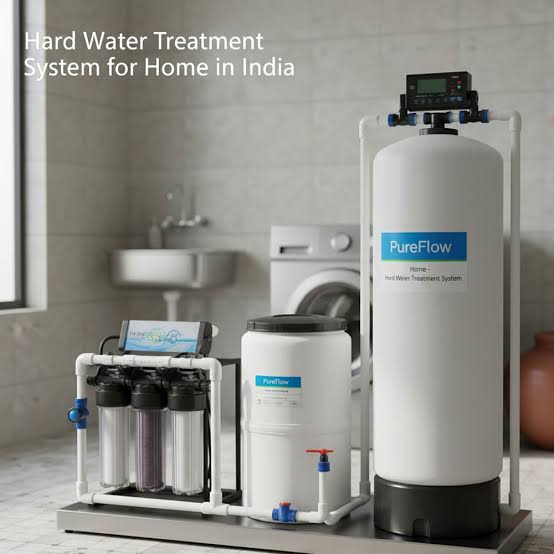
The standard whole-home water softener uses ion exchange — passing water through a bed of resin beads that swap calcium and magnesium ions for sodium or potassium ions. The output is softened water with elevated sodium content (for sodium-type softeners) or potassium content (for potassium-type). The resin bed periodically regenerates by flushing with a brine solution, which washes the captured minerals down the drain.
A properly sized and maintained ion exchange softener removes hardness minerals from all water entering the home — protecting pipes, appliances, and fixtures. The ongoing consumable cost is salt or potassium for regeneration ($10–$30/month depending on household water use and hardness level). The system requires annual maintenance: salt level checks, salt bridge prevention, and periodic resin cleaning.
Salt-Free Conditioners: What They Do and What They Don’t
Salt-free water conditioners (template-assisted crystallization or electrically-induced precipitation devices) don’t soften water in the traditional sense — they don’t remove hardness minerals. Instead, they change the form of the minerals in solution so they’re less likely to adhere to surfaces and form scale. This conditioning effect reduces new scale formation without eliminating the minerals.
For someone who wants to protect appliances and reduce scale formation without the sodium addition, salt management, or discharge of a traditional softener, these systems offer a maintenance-free middle option. They don’t produce the ‘slick’ water feel of softened water, and they don’t eliminate hardness minerals from the water supply. They’re genuine products with real (if partial) benefits — not the same as traditional softeners despite some marketing conflating the two.
Point-of-Use vs. Whole-Home: The Right Scale for Your Situation
Whole-home water treatment protects all plumbing and appliances but involves significant upfront cost ($500–$2,500 for equipment, plus installation) and ongoing maintenance. Point-of-use devices — showerhead filters, faucet-mounted filters, countertop water treatment units — treat water at specific use points for lower upfront cost but leave other fixtures and appliances unprotected.
If your primary concern is drinking water quality or skin and hair effects from showering, a point-of-use approach at those specific applications is cost-effective. If your concern is appliance protection and pipe scale — the whole-home cost effects of hard water — whole-home treatment is necessary because appliances can’t be protected by point-of-use fixtures installed elsewhere in the home