The Design Philosophy That Serves Everyone
Universal design — the principle of creating spaces and products usable by people of the widest range of abilities, ages, and sizes — produces bathroom designs that are more comfortable for everyone, not just for people with mobility limitations. A grab bar positioned where it’s genuinely useful isn’t a medical appliance; it’s a safety feature that benefits every member of a household, particularly at the moments (illness, injury, getting older) when everyone eventually needs more support.
Accessibility upgrades made proactively — before a specific need arises — are significantly cheaper, less disruptive, and more aesthetically integrated than those made reactively in response to a fall or diagnosis. The framing of ‘aging in place’ or ‘accessibility renovation’ undersells what is simply good bathroom design.
Grab Bars: The Most Impactful, Most Avoided Upgrade
Grab bars are the highest-impact safety upgrade available for an existing bathroom and the one most consistently avoided because of their association with institutional aesthetics. The residential grab bar market has changed dramatically — quality grab bars are now available in brushed nickel, matte black, polished chrome, and brass finishes that match contemporary fixture designs, from manufacturers including Moen, Delta, and architectural hardware companies.
The installation requirement that many people don’t know: grab bars must be anchored into wall studs or into blocking specifically installed for this purpose. A grab bar anchored only into drywall with toggle bolts will fail under the sudden load of a person catching themselves from a fall — the moment when the bar must work. If your bathroom walls don’t have studs in the ideal grab bar locations, a tiled backer board system or retrofit blocking installed through the existing wall provides the necessary anchoring substrate.
Shower Seating: Functional and Comfortable for All
A built-in shower bench or a fold-down teak seat isn’t exclusively for those who need to sit to shower — it’s useful for shaving legs, resting during a long shower, and placing bottles and products without bending. The perception that shower seating is a medical accommodation prevents many people from adding a feature that would genuinely improve their daily experience.
Built-in tile benches are the most durable and aesthetically integrated option, constructed at the time of shower tile installation (the bench must be part of the waterproofed structure, not added afterward). Fold-down teak seats that mount to the wall with concealed hardware are a retrofit option that folds flat when not in use, maintaining the visual spaciousness of the shower when the bench isn’t needed.
Lever Handles and Comfort-Height Toilets
Round knob faucet handles require grip and rotation — a motion that becomes difficult for people with arthritis, wet hands, or reduced hand strength. Lever handles operate with a palm press or arm push and are accessible to the full range of hand function. Replacing knob handles with levers is a low-cost, high-impact change that improves usability for every member of the household.
Comfort-height toilets (17–19 inches to the seat versus the standard 15 inches) reduce the distance of the sitting and standing motion, which is beneficial for people with knee or hip limitations and is also simply more comfortable for adults of average height and above. The difference in daily use is noticeable; the cost difference over a standard toilet is minimal.
Lighting for Visibility, Not Just Ambience
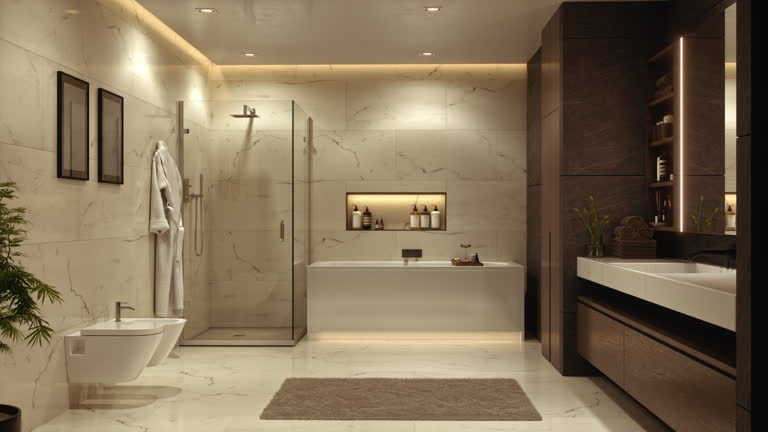
Bathroom lighting designed primarily for atmosphere — dim, warm, flattering — can create hazards at night when someone enters the bathroom with compromised alertness. Night lighting in bathrooms (plug-in LED night lights or hardwired low-level lighting at baseboard height that activates on a motion sensor) provides sufficient visibility for safe navigation without requiring full overhead lights that disrupt sleep.
The medicine cabinet and vanity area benefit from lighting that renders color and contrast accurately — particularly important for reading medication labels, which requires distinguishing between similar-looking bottles. CRI 90+ lighting at the vanity is both the accessibility-appropriate choice and the one that produces the most accurate visual environment for any bathroom task.