
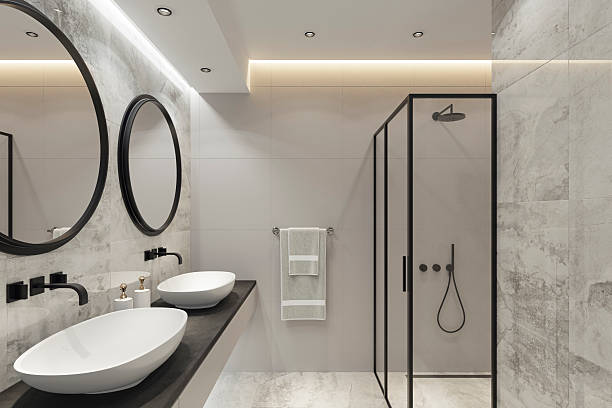
The Most Requested Bathroom Renovation — With Caveats
Converting a bathtub to a walk-in shower is consistently among the most requested bathroom renovations, driven by the appeal of a more spa-like space and the recognition that many homeowners use their tub rarely or never. For the right household and the right home, this conversion makes excellent sense. For others, it creates resale complications that the convenience gain doesn’t justify.
The decision requires honest assessment of three factors: how you actually use your bathroom, who else in the household does (or might), and what the conversion does to your home’s value in your specific market.
The Resale Reality: One Tub Per Home Minimum
Real estate agents and appraisers apply a consistent rule in most markets: a home should retain at least one bathtub, and removing the only tub in a home reduces its buyer pool and can reduce its appraised value. Families with young children and buyers who use baths for soaking or therapeutic purposes represent a meaningful portion of the buyer market that becomes unavailable to a home without a tub.
If the bathroom you’re converting is the only full bathroom in the home, the resale impact is more significant than if a second bathroom retains a tub. Converting a second or third bathroom’s tub to a walk-in shower in a home that still has a tub elsewhere typically has minimal resale impact and may actually improve appeal in the primary bath.
Structural Considerations Before Any Design Decisions
A tub-to-shower conversion requires the drain to move — a bathtub drain is positioned at the foot of the tub along the wall, while a shower drain is centered in the floor area. Moving the drain requires cutting the subfloor, reconfiguring the drain line below it, and re-establishing slope toward the new drain location. In a first-floor bathroom over a basement or crawl space, this is straightforward. In a second-floor bathroom over finished space below, it’s significantly more complex and expensive.
The waterproofing requirements for a walk-in shower exceed those of a tub surround significantly. A dedicated shower area is a continuous wet zone that needs a properly sloped, waterproofed floor assembly — not just the same tile-on-cement-board approach that works for tub surrounds. Inadequate shower waterproofing is the most common source of the catastrophic water damage that requires complete bathroom gut and rebuild.
Curbless Showers: The Accessibility and Aesthetic Choice
Curbless (zero-threshold) showers — where the shower floor is continuous with the bathroom floor without a raised curb — are both an accessibility feature and the current aesthetic standard in contemporary bathroom design. They’re also more technically demanding to execute correctly than curbed showers.
A curbless shower requires the shower floor to be sloped adequately (approximately 1/4 inch per foot toward the drain) while transitioning seamlessly to the bathroom floor level. This requires either recessing the shower floor into the subfloor structure (cutting joists in some configurations) or building up the bathroom floor outside the shower to match. Both approaches have structural implications that need to be planned at the design stage, not discovered during installation.
Sizing: Where Most Shower Conversions Disappoint
The bathtub footprint — typically 30 inches by 60 inches — creates a minimum shower size that feels cramped for a walk-in shower experience. A 36-by-36-inch shower works but feels confining; 36 by 48 inches is functional; 36 by 60 inches (using the full tub footprint) begins to feel like a genuine shower. If the bathroom dimensions allow, expanding the shower beyond the tub footprint — even adding 6 to 12 additional inches — transforms the experience.
This expansion requires expanding the waterproofed area and potentially reconfiguring the room layout, which adds cost but also adds the value that makes the conversion worth doing. A minimum-footprint tub-to-shower conversion that costs as much as a generous-size shower conversion delivers a notably inferior daily experience.