The False Choice Most Parents Make
Parents of young children commonly feel they face a binary choice: design a home that works beautifully as an adult living environment, or design a home that’s functional for children — and accept that these goals are in fundamental conflict. This perception produces two equally unsatisfying outcomes: beautiful, fragile rooms that children can’t actually inhabit without anxiety on everyone’s part, or completely child-proofed spaces that feel like no adult aesthetic consideration was applied.
The conflict between adult aesthetics and child functionality is real in some areas and largely imagined in others. Understanding which is which produces spaces that genuinely work for the whole household.
Material Selection Is the Primary Tool
The majority of the conflict between adult aesthetics and child functionality comes from material choice rather than design style. A cream linen sofa in a house with young children isn’t a child-hostile design decision because of the style — it’s because cream linen shows every mark and is difficult to clean. The same sofa in a performance fabric or leather can look equally sophisticated and withstand daily child contact without the anxiety.
Performance fabrics (Crypton, Revolution, Sunbrella indoor, and similar) have advanced to the point where they’re visually indistinguishable from natural fabrics in many applications and clean with water or mild soap without leaving watermarks. Leather is extremely durable, ages attractively, and wipes clean — a design choice that’s adult in aesthetic and practical in function. The choice of material, not the choice of style, is what determines whether a piece works in a family home.
Dedicated Zones for Child Activity
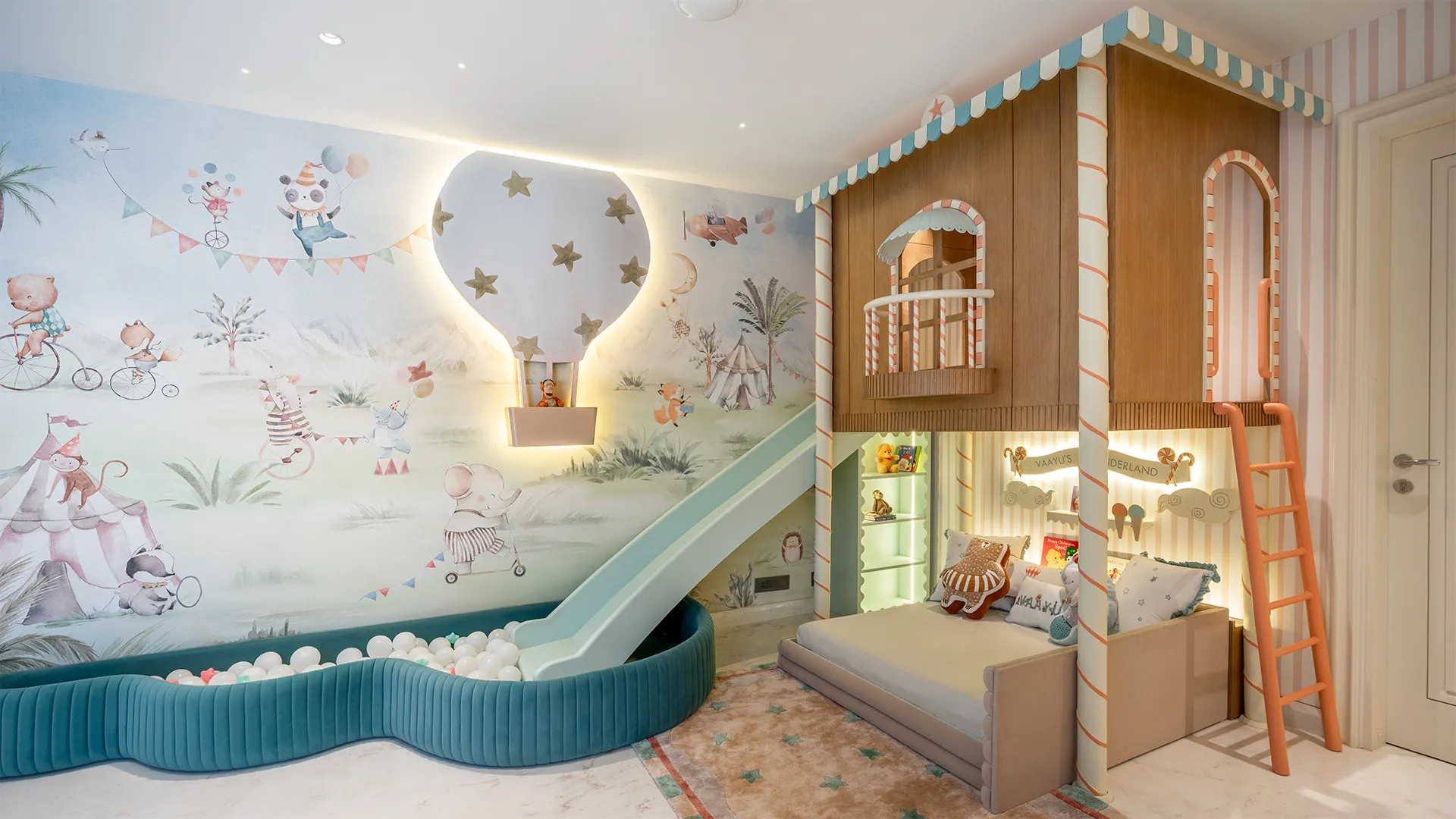
One of the most effective family design strategies is providing genuinely good, child-designed space within the home so that child activity concentrates there rather than spreading across the entire home. A playroom, a child’s corner within the living room, or a homework station doesn’t need to be large to be effective — it needs to be genuinely organized for children’s use, with accessible storage at child height and surfaces appropriate for their activities.
The relationship between dedicated child space quality and adult space invasion is direct: when a child has no space designed for them, they occupy the adult space. When the child’s space is well-designed, comfortable, and their own, the adult space is more naturally respected. This is behavioral design — shaping behavior by designing the environment, not by enforcing rules.
Choosing Pieces That Grow
Children’s furniture that’s replaced every few years as the child grows creates continuous expense and continuous disruption to the room’s design. Choosing pieces that adapt as the child ages — convertible cribs that become toddler beds and then full beds, adjustable-height desks, shelving systems that reconfigure — extends the useful life of each piece and reduces the frequency of room redesign.
Adult-scale furniture in children’s rooms that children grow into — a proper full-size bed from age 6 rather than a child-size bed that requires replacement at 10, a real upholstered reading chair rather than a child-size plastic one — also produces better design outcomes. Rooms that contain genuine quality rather than children’s-product versions of everything feel more considered and last longer without feeling dated.
Art and Color: Where Children’s Influence Belongs
Children have strong color and imagery preferences that deserve expression in their home environment — and these preferences change quickly as children develop, which makes them appropriate in contexts that are easily updated. Artwork, accessories, bedding, and accent textiles are the right surfaces for child-influenced color and imagery because they can be changed as preferences evolve without disrupting the room’s permanent investment.
The structural elements of a room — wall color, flooring, window treatments, primary furniture — benefit from adult restraint that creates a neutral backdrop against which children’s current interests can be expressed and updated. A room with neutral walls, a quality neutral rug, and a bed with interchangeable covers adapts to a child’s changing interests over a decade without requiring significant investment at each transition.