
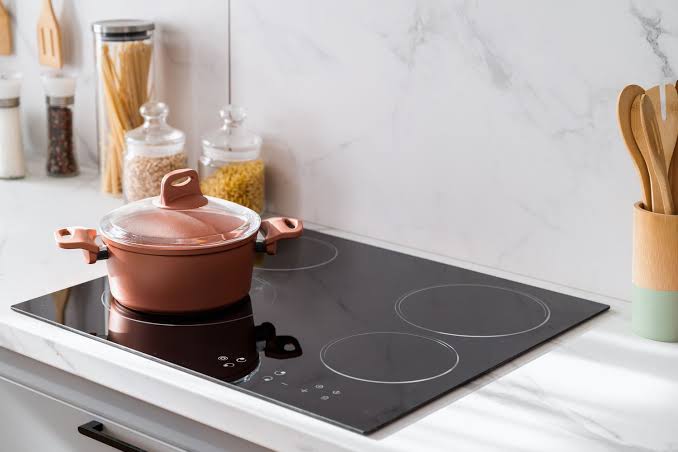
The Cooking Technology That Changes How Kitchens Work
Induction cooking has moved from a niche professional kitchen technology to a mainstream residential option rapidly — driven by electrification trends, improving performance and affordability, and the genuine cooking advantages that experienced cooks who’ve used induction consistently report. It’s also fundamentally different from both gas and conventional electric in ways that affect cookware compatibility, kitchen electrical requirements, and cooking technique.
The switch to induction is more involved than replacing a cooktop with an equivalent model. Understanding what changes and what doesn’t prevents the discovery of incompatibilities after purchase.
How Induction Actually Works and Why It Matters
Induction cooktops generate heat by inducing an electrical current directly in the cookware itself — the cooking surface doesn’t get hot independently. This produces the rapid, precise, responsive heat control that cooks value: a pan of water that would take 4–5 minutes to boil on a gas burner can reach boiling in under 2 minutes on high-power induction. And when you turn the heat down, it responds immediately — there’s no thermal lag from a hot burner surface.
The surface between the induction element and the pan stays cool — warm from residual heat conducted from the pan, but not hot from the cooking surface itself. Spills on an induction cooktop don’t burn onto the surface because the surface isn’t hot enough to cook the spill. This makes induction by far the easiest cooktop surface to clean.
Cookware Compatibility: The First Question to Answer
Induction requires magnetic cookware — the electromagnetic field only induces current in ferromagnetic metals. The test: hold a magnet to the bottom of each pot and pan. If the magnet sticks firmly, the piece is induction-compatible. Cast iron, enameled cast iron, stainless steel with a magnetic base, and carbon steel are all compatible. Aluminum, copper, and most non-clad stainless steel are not.
If your existing cookware is largely aluminum or copper, switching to induction requires a simultaneous cookware investment. A full set of induction-compatible cookware can run $200–$1,000+ depending on quality. This is a real additional cost that belongs in the induction switch budget. If you already cook in cast iron or stainless, you may be fully compatible without any additional purchases.
Electrical Requirements: The Infrastructure Question
A full induction range or a multi-burner induction cooktop requires a 240V electrical circuit — the same voltage as an electric dryer or oven. If you’re currently cooking on gas, your kitchen may not have a 240V circuit for the cooktop location, requiring electrical panel work and new wiring that adds $500–$1,500 to the switch cost.
If you’re replacing an existing electric cooktop, the circuit may already be in place and sized correctly. Verify the existing circuit’s amperage rating against the new cooktop’s requirements — some high-power induction units require a 50-amp circuit where the existing wiring is 40-amp, requiring circuit upgrade. A licensed electrician should assess your kitchen’s electrical capacity before purchasing an induction appliance.
Cooking Technique Adjustments
Experienced gas cooks switching to induction often need a brief adjustment period, not because induction is difficult but because the heat control response is different. With gas, you can visually gauge heat output by flame height. With induction, the power level setting is the only feedback — and different cooktops number their settings differently, so ‘level 6’ means something different on every model.
The adjustment typically involves learning the equivalent power settings for common tasks: what level maintains a gentle simmer, what level sears effectively, what level holds a sauce warm without scorching. This calibration takes 1–2 weeks of cooking and most cooks report preferring induction’s responsiveness once they’ve made the adjustment. The precision of induction — the ability to hold an exact temperature for candy-making or tempering chocolate — is a capability that gas simply can’t match.